BIOLOGY FOR LIFE
  • IB Bio Syllabus
    • Unity and Diversity (A) >
      • A1 molecules >
        • A1.1: Water
        • A1.2: Nucleic Acids
      • A2 Cells >
        • A2.1: Origins of Cells
        • A2.2: Cell Structure
        • A2.3: Viruses
      • A3 Organisms >
        • A3.1: Diversity of Organisms
        • A3.2: Classification and Cladistics
      • A4 Ecosystems >
        • A4.1: Evolution and Speciation
        • A4.2: Conservation of Biodiversity
    • Form and Function (B) >
      • B1 Molecules >
        • B1.1: Carbohydrates and Lipids
        • B1.2: Proteins
      • B2 Cells >
        • B2.1 Membranes and Membrane Transport
        • B2.2 Organelles and Compartmentalization
        • B2.3 Cell Specialization
      • B3 Organisms >
        • B3.1 Gas Exchange
        • B3.2 Transport
        • B3.3 Muscle and Motility
      • B4 Ecosystems >
        • B4.1 Adaptation to Environment
        • B4.2 Ecological Niches
    • Interaction and Interdependence (C) >
      • C1 Molecules >
        • C1.1: Enzymes and Metabolism
        • C1.2: Cell Respiration
        • C1.3: Photosynthesis
      • C2 Cells >
        • C2.1: Chemical Signaling
        • C2.2: Neural Signaling
      • C3 Organisms >
        • C3.1: Integration of Body Systems
        • C3.2: Defense Against Disease
      • C4 Ecosystems >
        • C4.1 Populations and Communities
        • C4.2 Transfers of Energy and Matter
    • Continuity and Change (D) >
      • D1 Molecules >
        • D1.1: DNA Replication
        • D1.2: Protein Synthesis
        • D1.3: Mutation and Gene Editing
      • D2 Cells >
        • D2.1: Cell and Nuclear Division
        • D2.2: Gene Expression
        • D2.3: Water Potential
      • D3 Organisms >
        • D3.1: Reproduction
        • D3.2: Inheritance
        • D3.3: Homeostasis
      • D4 Ecosystems >
        • D4.1: Natural Selection
        • D4.2: Stability and Change
        • D4.3: Climate Change
  • IB Requirements
    • Internal Assessment >
      • Research Design
      • Analysis
      • Conclusion
      • Evaluation
    • External Assessment >
      • Exam Revision
    • Extended Essay
    • Reflective Project
    • Collaborative Sciences Project
    • Learner Profile
  • Skills for Biology
    • Tools >
      • Experimental Techniques >
        • Addressing Safety
        • Measuring Variables >
          • Measurement Uncertainties
          • Observations
          • Biological Drawings
        • Applying Techniques >
          • Microscopy
      • Technology >
        • Tech to Collect Data
        • Tech to Process Data
      • Mathematics >
        • General Math
        • Units and Symbols
        • Processing Uncertainties
        • Graphing >
          • Types of Graphs
          • How to Graph
          • Graph Error Bars
    • Inquiry Processes >
      • Exploring >
        • Research Questions
        • Hypotheses and Predictions
      • Designing >
        • Variables
        • Sampling
      • Control of Variables
      • Collecting Data >
        • Data Tables
      • Processing Data
      • Interpreting Results
      • Concluding
      • Evaluating >
        • Error Analysis
  • Statistics
    • Descriptive Statistics >
      • Skew and the Normal Distribution
      • Outliers
      • Measures of Central Tendancy
      • Measures of Dispersion
      • Correlation Coefficients
      • Coefficient of Determination
    • Inferential Statistics >
      • Standard Error
      • T-Test
      • ANOVA
      • Kruskal-Wallis
      • X2 Test of Independence
      • X2 Goodness of Fit
    • Glossary of Statistic Terms and Equations
  • SHS Course Info
    • Above & Beyond >
      • Biology Club
      • Pumpkin Carving
      • Scavenger Hunt
      • Science News
      • Wood Duck Project (legacy)
      • Invasive Crayfish Project (legacy)
    • Assessment >
      • Class Grading IB Bio I
      • Class Grading IB Bio II
      • Daily Quizzes (legacy)
      • Lab Practicals (legacy)
    • Class Photos
    • Recommendations
  • Contact
    • About >
      • Philosophy
      • Resume
      • Reflection
      • Favorite Quotes
      • AEF Blog
  • Expeditions
    • Bahamas (2009)
    • Trinidad (2010)
    • Trinidad (2011)
    • Ecuador (2012)
    • Trinidad (2013)
    • Peru (2014)
    • Bahamas (2015)
    • Peru (2016)
    • Costa Rica (2017)
    • Costa Rica (2018)
    • Arizona (2022)
    • Florida (2023)
    • Belize (2024)
    • Costa Rica (2025)
  • Summer Ecology Research
  • Teacher Resources

Outliers

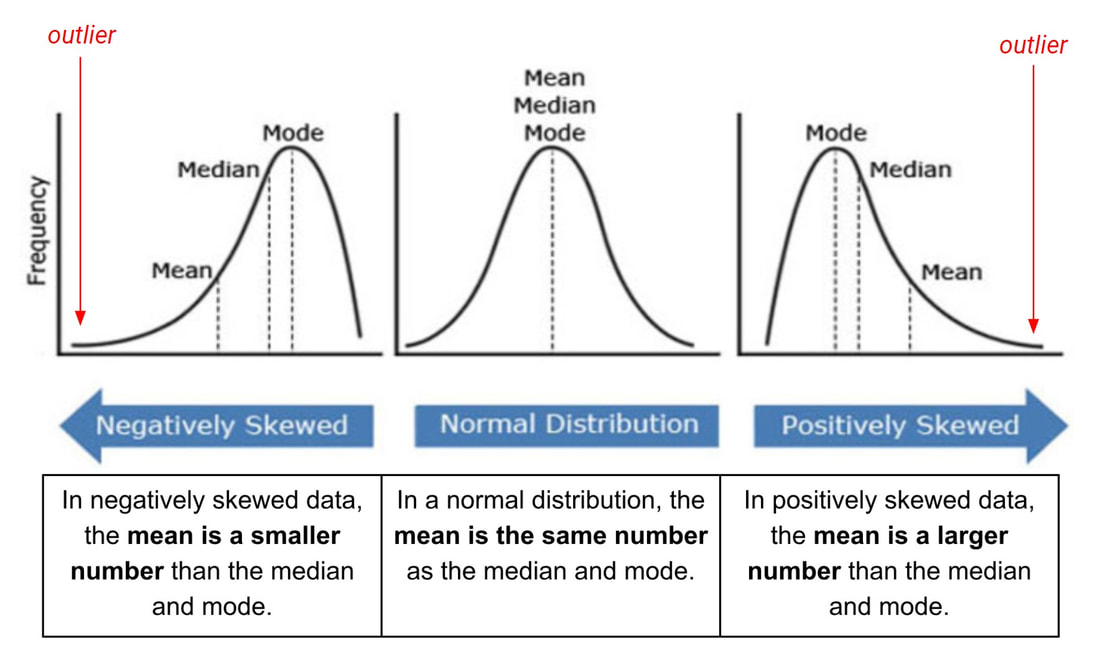
An outlier is a data point that lies an abnormal distance from other values in a data set.  Outliers can cause a data set to be “skewed” from a normal bell curve distribution.  By doing so, outliers can have a disproportionate effect on statistical results, such as the mean, which can result in misleading conclusions.
Picture
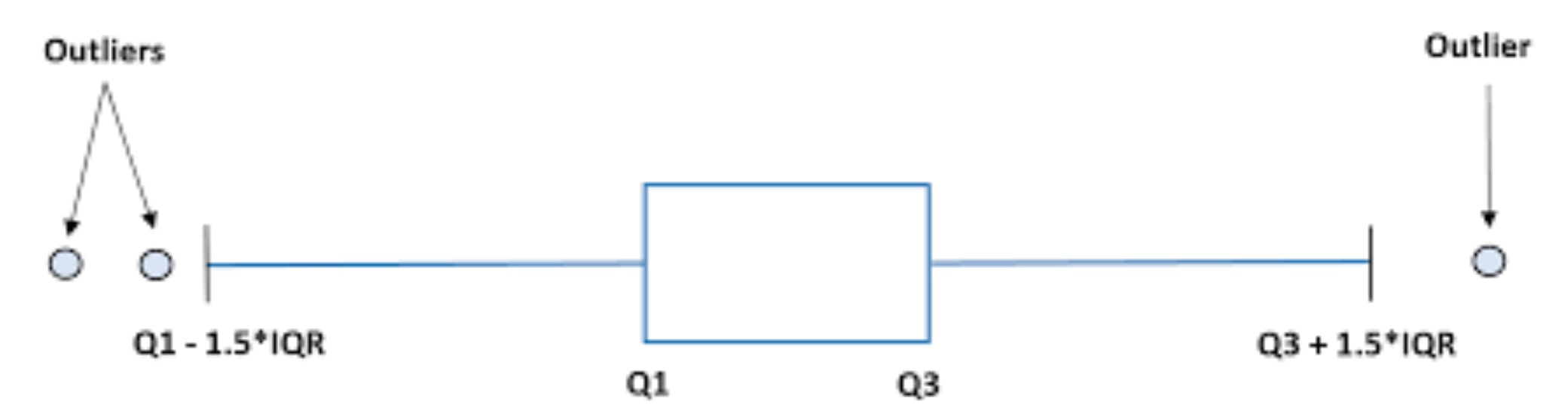
A data point is categorized as an outlier if if falls above or below 1.5 times the IQR.  IQR stands for Interquartile Range.   The IQR is a measure of dispersion, that represents the range of the middle 50% of the data in a data set.  IQR is calculated by subtracting the first quartile (Q1) from the third quartile (Q3).  
IQR = Q3 − Q1
Outliers are data points which are above and/or below 1.5 times the IQR. 
  • ​Lower Outlier Boundary: Q1 − (1.5 × IQR)
  • Upper Outlier Boundary: Q3 + (1.5 × IQR)​

Any data point that is less than the lower boundary or greater than the upper boundary is considered an outlier. You can use an "outlier IQR calculator" online to help you with these calculations.​
Picture
Representation of outliers on a box-and-whisker plot. From DataClassroom (https://userguide.dataclassroom.com/docs/showing-outliers)
If there is an outlier in a data set:
Outliers are not always mistakes.  Outliers are usually perfectly valid data points that just happen to be a bit unusual. For example, a basketball player's who is 6'8" might be an outlier in a dataset of average student heights, but it's a correct measurement. In these cases, you should not delete them from your analysis.
​
However, if you have a good reason to believe an outlier is a mistake (like if you're measuring plant growth and one plant's height is entered as 500 cm instead of 50 cm), then exclude that data point from your analysis.  

​Mean vs. Median
When a dataset contains an outlier, it can heavily influence the mean. A very high outlier will pull the mean up, while a very low one will pull it down, making the mean a less accurate representation of the data's central tendency.  In such cases, the median is a better choice for measuring central tendency.  The median is the middle value of a dataset when it is ordered from least to greatest.  Because it is based on position rather than value, the median is less influenced by outliers and provides a more reliable measure of the "center" of a data set.
I give many of my IB Biology resources away, for the benefit of students and teachers around the world. 
If you've found the materials helpful, please consider sending a gift from our classroom wish list.


​Did I forget something?  Know of a mistake? Have a suggestion?  Let me know by emailing me here.

Before using any of the files available on this site,
​please familiarize yourself with the 
Creative Commons Attribution License. 
​​​It prohibits the use of any material on this site for commercial  purposes of any kind.  ​
​
Picture
  • IB Bio Syllabus
    • Unity and Diversity (A) >
      • A1 molecules >
        • A1.1: Water
        • A1.2: Nucleic Acids
      • A2 Cells >
        • A2.1: Origins of Cells
        • A2.2: Cell Structure
        • A2.3: Viruses
      • A3 Organisms >
        • A3.1: Diversity of Organisms
        • A3.2: Classification and Cladistics
      • A4 Ecosystems >
        • A4.1: Evolution and Speciation
        • A4.2: Conservation of Biodiversity
    • Form and Function (B) >
      • B1 Molecules >
        • B1.1: Carbohydrates and Lipids
        • B1.2: Proteins
      • B2 Cells >
        • B2.1 Membranes and Membrane Transport
        • B2.2 Organelles and Compartmentalization
        • B2.3 Cell Specialization
      • B3 Organisms >
        • B3.1 Gas Exchange
        • B3.2 Transport
        • B3.3 Muscle and Motility
      • B4 Ecosystems >
        • B4.1 Adaptation to Environment
        • B4.2 Ecological Niches
    • Interaction and Interdependence (C) >
      • C1 Molecules >
        • C1.1: Enzymes and Metabolism
        • C1.2: Cell Respiration
        • C1.3: Photosynthesis
      • C2 Cells >
        • C2.1: Chemical Signaling
        • C2.2: Neural Signaling
      • C3 Organisms >
        • C3.1: Integration of Body Systems
        • C3.2: Defense Against Disease
      • C4 Ecosystems >
        • C4.1 Populations and Communities
        • C4.2 Transfers of Energy and Matter
    • Continuity and Change (D) >
      • D1 Molecules >
        • D1.1: DNA Replication
        • D1.2: Protein Synthesis
        • D1.3: Mutation and Gene Editing
      • D2 Cells >
        • D2.1: Cell and Nuclear Division
        • D2.2: Gene Expression
        • D2.3: Water Potential
      • D3 Organisms >
        • D3.1: Reproduction
        • D3.2: Inheritance
        • D3.3: Homeostasis
      • D4 Ecosystems >
        • D4.1: Natural Selection
        • D4.2: Stability and Change
        • D4.3: Climate Change
  • IB Requirements
    • Internal Assessment >
      • Research Design
      • Analysis
      • Conclusion
      • Evaluation
    • External Assessment >
      • Exam Revision
    • Extended Essay
    • Reflective Project
    • Collaborative Sciences Project
    • Learner Profile
  • Skills for Biology
    • Tools >
      • Experimental Techniques >
        • Addressing Safety
        • Measuring Variables >
          • Measurement Uncertainties
          • Observations
          • Biological Drawings
        • Applying Techniques >
          • Microscopy
      • Technology >
        • Tech to Collect Data
        • Tech to Process Data
      • Mathematics >
        • General Math
        • Units and Symbols
        • Processing Uncertainties
        • Graphing >
          • Types of Graphs
          • How to Graph
          • Graph Error Bars
    • Inquiry Processes >
      • Exploring >
        • Research Questions
        • Hypotheses and Predictions
      • Designing >
        • Variables
        • Sampling
      • Control of Variables
      • Collecting Data >
        • Data Tables
      • Processing Data
      • Interpreting Results
      • Concluding
      • Evaluating >
        • Error Analysis
  • Statistics
    • Descriptive Statistics >
      • Skew and the Normal Distribution
      • Outliers
      • Measures of Central Tendancy
      • Measures of Dispersion
      • Correlation Coefficients
      • Coefficient of Determination
    • Inferential Statistics >
      • Standard Error
      • T-Test
      • ANOVA
      • Kruskal-Wallis
      • X2 Test of Independence
      • X2 Goodness of Fit
    • Glossary of Statistic Terms and Equations
  • SHS Course Info
    • Above & Beyond >
      • Biology Club
      • Pumpkin Carving
      • Scavenger Hunt
      • Science News
      • Wood Duck Project (legacy)
      • Invasive Crayfish Project (legacy)
    • Assessment >
      • Class Grading IB Bio I
      • Class Grading IB Bio II
      • Daily Quizzes (legacy)
      • Lab Practicals (legacy)
    • Class Photos
    • Recommendations
  • Contact
    • About >
      • Philosophy
      • Resume
      • Reflection
      • Favorite Quotes
      • AEF Blog
  • Expeditions
    • Bahamas (2009)
    • Trinidad (2010)
    • Trinidad (2011)
    • Ecuador (2012)
    • Trinidad (2013)
    • Peru (2014)
    • Bahamas (2015)
    • Peru (2016)
    • Costa Rica (2017)
    • Costa Rica (2018)
    • Arizona (2022)
    • Florida (2023)
    • Belize (2024)
    • Costa Rica (2025)
  • Summer Ecology Research
  • Teacher Resources